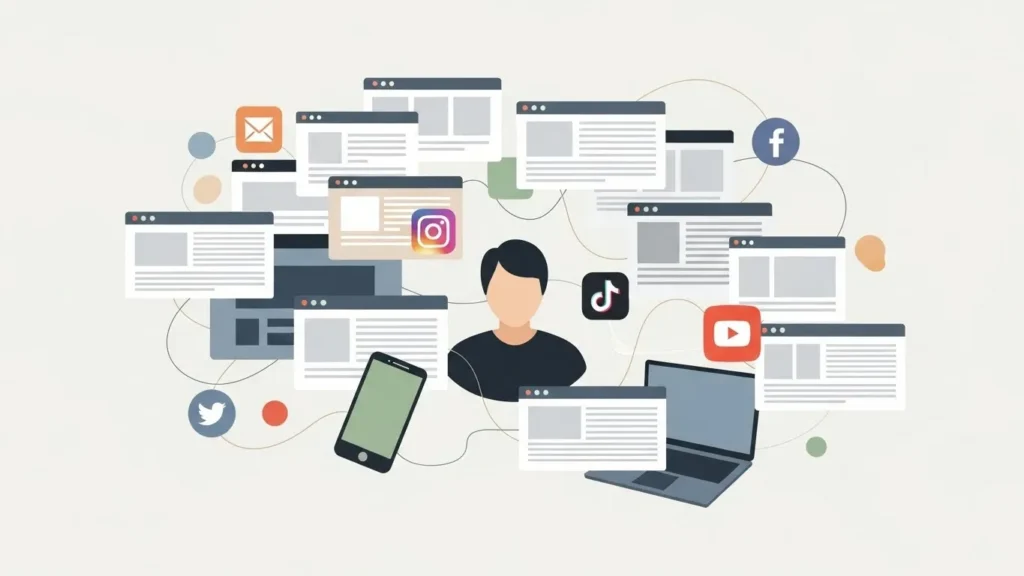
In the first part of this article (click here to read it), we examined how marketing is changing at the beginning of the customer journey. AI tools, evolving search behavior, and educational content are helping businesses become more visible when people begin researching products.
The next challenge comes after that initial discovery. Businesses that consistently turn visibility into sales usually have systems in place to capture leads, maintain communication, and bring customers back over time.
This is where first-party data, automation, and local search strategies become increasingly important.
The following trends explore how businesses are strengthening those connections and turning online visibility into measurable growth.
Trend #4: First-Party Data Is Becoming a Critical Marketing Asset
In recent years, major technology companies have introduced privacy changes that limit how businesses track customers across the internet. Third-party cookies, which previously allowed advertisers to follow user behavior across websites, are gradually disappearing.
As these tracking tools fade, businesses are placing greater emphasis on first-party data.
First-party data refers to information a company collects directly from its customers and website visitors. Because the data comes from direct interactions, it is more accurate and more sustainable than relying on outside platforms.
Examples of first-party data include:
- Email subscribers
- Customer purchase history
- Website activity
- Form submissions
- Appointment bookings
- Loyalty program participation
This information allows businesses to build stronger relationships with their audience while maintaining control over their marketing data.
Why First-Party Data Matters
Businesses that rely heavily on paid advertising often depend on external platforms for targeting and performance insights. When privacy policies change, those targeting capabilities can shrink overnight.
First-party data provides a more stable foundation.
When a company owns its customer data, it can communicate with its audience directly through channels such as email, SMS messaging, and automated follow-up systems.
This reduces reliance on unpredictable advertising algorithms.
| Marketing Channel | Who Controls the Audience |
|---|---|
| Paid social media ads | Platform controls targeting |
| Search advertising | Platform controls visibility |
| Email marketing | Business owns subscriber list |
| SMS marketing | Business owns contact list |
| Customer database | Business controls relationships |
The difference is significant.
When businesses build strong databases of customer contacts, they gain the ability to reach their audience whenever they choose.
How Retail Businesses Can Build First-Party Data
Collecting first-party data does not require complicated systems. Many businesses already have opportunities to gather this information during normal customer interactions.
Some of the most effective methods include:
- Encouraging website visitors to join email lists
- Offering downloadable guides or promotions in exchange for contact information
- Capturing leads through website chat or forms
- Collecting customer emails during purchases
- Using loyalty or rewards programs
Each interaction helps expand the customer database.
Over time, this database becomes one of the most valuable marketing assets a business owns.
Turning Data Into Actionable Marketing
Collecting data alone is not enough. The real value comes from using that information to personalize communication and strengthen customer relationships.
For example:
| Customer Activity | Marketing Response |
|---|---|
| New subscriber joins email list | Welcome sequence introducing the business |
| Customer purchases a product | Follow-up tips and complementary product recommendations |
| Visitor downloads a buying guide | Email series with additional helpful resources |
| Customer inactive for several months | Re-engagement promotion |
These types of automated interactions allow businesses to stay connected with customers without requiring constant manual effort.
Retailers that use customer data effectively can maintain ongoing communication, encourage repeat visits, and strengthen brand loyalty.
Trend #5: Automation Is Redefining How Businesses Follow Up With Customers
One of the most overlooked challenges in marketing is consistency.
Many businesses generate leads through advertising or website traffic, but follow-up often happens irregularly. Messages are delayed, conversations are missed, and potential customers lose interest.
Automation addresses this problem.
Modern marketing systems allow businesses to create automated workflows that respond instantly to customer actions. When someone fills out a form, sends a message, or books an appointment, the system can trigger a sequence of follow-ups automatically.
This ensures that every lead receives timely communication.
Where Automation Has the Greatest Impact
Automation can improve several critical areas of the customer journey.
Lead response
Speed matters when responding to new inquiries. Automated systems can send immediate responses, acknowledging the request and guiding prospects toward the next step.
Appointment reminders
Retail businesses that offer consultations or showroom visits can reduce missed appointments through automated reminders.
Customer nurturing
Not every prospect is ready to buy immediately. Automated email sequences allow businesses to stay in touch with helpful information until customers are ready to move forward.
Re-engagement campaigns
Automation can identify inactive customers and send targeted promotions encouraging them to return.
The Business Case for Marketing Automation
Businesses that implement automation typically see improvements in several performance metrics.
| Marketing Metric | Impact of Automation |
|---|---|
| Lead response time | Faster engagement |
| Customer follow-up | More consistent communication |
| Conversion rates | Higher due to timely contact |
| Operational efficiency | Less manual workload |
Instead of requiring staff to manage every interaction manually, automation ensures that communication continues even during busy periods.
For retail businesses with limited marketing teams, this efficiency is extremely valuable.
Automation allows companies to deliver professional, responsive customer experiences without dramatically increasing operational costs.
Trend #6: Local SEO Is Becoming the Deciding Factor for Retail Discovery
While marketing technology continues to evolve, one reality remains consistent for retail businesses: most customers still begin their search locally.
When someone types “furniture store near me,” “best mattress store,” or “flooring showroom nearby,” they are not looking for a brand on the other side of the country. They want a trusted local business they can visit.
This is where local SEO becomes critical.
Local search optimization determines whether a business appears in Google’s local results, map listings, and location-based searches. These placements often appear above traditional search results and capture a large share of clicks.
For retail businesses that depend on foot traffic, visibility in these results can directly influence store visits and sales.
The Elements That Drive Local Visibility
Local search rankings rely on a combination of signals that help search engines determine which businesses are most relevant and trustworthy.
Some of the most important factors include:
| Local SEO Factor | Why It Matters |
|---|---|
| Google Business Profile optimization | Improves visibility in map results |
| Customer reviews | Builds credibility and trust signals |
| Consistent business information | Helps search engines verify accuracy |
| Location-focused website pages | Reinforces geographic relevance |
| Local backlinks and citations | Strengthens authority |
Many retailers underestimate how much influence these elements have on their discoverability.
For example, two businesses in the same city may sell similar products, but the one with a well-maintained Google Business Profile, consistent reviews, and location-optimized website content will almost always appear higher in local results.
Reviews Are Now a Major Ranking and Trust Signal
Customer reviews influence both search rankings and purchasing decisions.
Search engines interpret frequent, authentic reviews as a signal that a business is active and trusted. At the same time, potential customers rely heavily on reviews when deciding where to shop.
Consider how reviews affect consumer behavior.
| Rating Range | Typical Customer Perception |
|---|---|
| 4.7 – 5.0 | Highly trusted business |
| 4.3 – 4.6 | Reliable with strong reputation |
| 4.0 – 4.2 | Acceptable but may require comparison |
| Below 4.0 | Potential concern for buyers |
Businesses that consistently request feedback from satisfied customers often maintain stronger reputations online.
Simple systems such as automated review requests after purchases or service interactions can significantly increase the number of reviews a business receives.
The Role of Location-Focused Website Content
Another important element of local SEO is the content on a business’s website.
Search engines look for signals that confirm a business truly operates within a specific geographic area. This is often reinforced through location pages, service descriptions, and locally relevant content.
For example, a flooring retailer might publish articles about topics such as:
- Choosing flooring for Midwest climates
- Flooring materials that work well in high-traffic family homes
- Maintenance tips for hardwood floors in humid regions
These types of articles demonstrate local expertise while also improving search visibility.
When combined with strong Google Business optimization and positive reviews, this strategy significantly increases the likelihood that a business will appear when nearby customers search for relevant products.
Bringing These Trends Together
Individually, each marketing trend discussed in this guide can improve visibility or efficiency. When implemented together, they form a much more powerful system.
Modern marketing works best when it functions as an integrated process rather than a collection of isolated tactics.
Consider how these elements connect.
| Marketing Component | Role in the Customer Journey |
|---|---|
| Educational content | Attracts customers during research |
| SEO optimization | Ensures the business appears in search results |
| First-party data collection | Captures leads and customer information |
| Automation systems | Maintains consistent communication |
| AI tools | Improve targeting and marketing decisions |
| Local SEO | Drives nearby customers to the business |
Together, these elements create a marketing system that operates continuously.
Instead of relying on occasional campaigns or promotions, businesses can build an ecosystem that attracts new prospects, nurtures relationships, and encourages repeat purchases.
This approach is particularly important for retail businesses competing against national brands and online marketplaces.
Large companies often have substantial advertising budgets, but smaller businesses can compete by creating stronger customer relationships, providing better information, and responding faster to inquiries.
Marketing technology is making that possible.
Practical Steps Businesses Can Take Right Now
Understanding marketing trends is useful, but progress comes from implementation. Businesses that want to stay competitive in 2026 should focus on building systems that support consistent visibility and communication.
Some practical steps include:
Audit your online presence
Start by evaluating your website, search visibility, and local listings. Identify areas where information may be incomplete or outdated.
Strengthen your content strategy
Publish helpful articles that answer real customer questions. Over time, this builds authority and attracts organic search traffic.
Capture more customer data
Encourage visitors to subscribe to email lists, download guides, or request consultations. Building a strong contact database increases marketing flexibility.
Automate follow-up communication
Ensure every lead receives timely responses through automated messaging and follow-up systems.
Encourage customer reviews
Consistently request feedback from satisfied customers to strengthen online reputation and search visibility.
These improvements do not need to happen all at once. Many businesses gradually implement these strategies as part of an ongoing marketing plan.
The key is to move beyond one-off marketing tactics and begin building systems that work continuously.
Conclusion: Marketing in 2026 Will Reward Businesses That Adapt
Digital marketing is entering a more intelligent and data-driven phase. Artificial intelligence, evolving search behavior, and privacy changes are reshaping how businesses attract and engage customers.
At the same time, these shifts are creating new opportunities.
Businesses that invest in helpful content, build strong customer databases, and implement automation can operate with a level of efficiency that was difficult to achieve only a few years ago.
Retail companies that embrace these changes are seeing several advantages:
- More consistent online visibility
- Stronger customer relationships
- Faster response times to new inquiries
- Higher conversion rates from marketing efforts
Perhaps most importantly, modern marketing allows businesses to stay connected with customers throughout the entire buying journey, from initial research to long-term loyalty.
For retail businesses navigating an increasingly competitive market, adapting to these trends is not just about keeping up with technology. It is about building a marketing foundation that supports sustainable growth.
The companies that treat marketing as a system rather than a series of isolated tactics will be the ones best positioned to thrive in the years ahead.